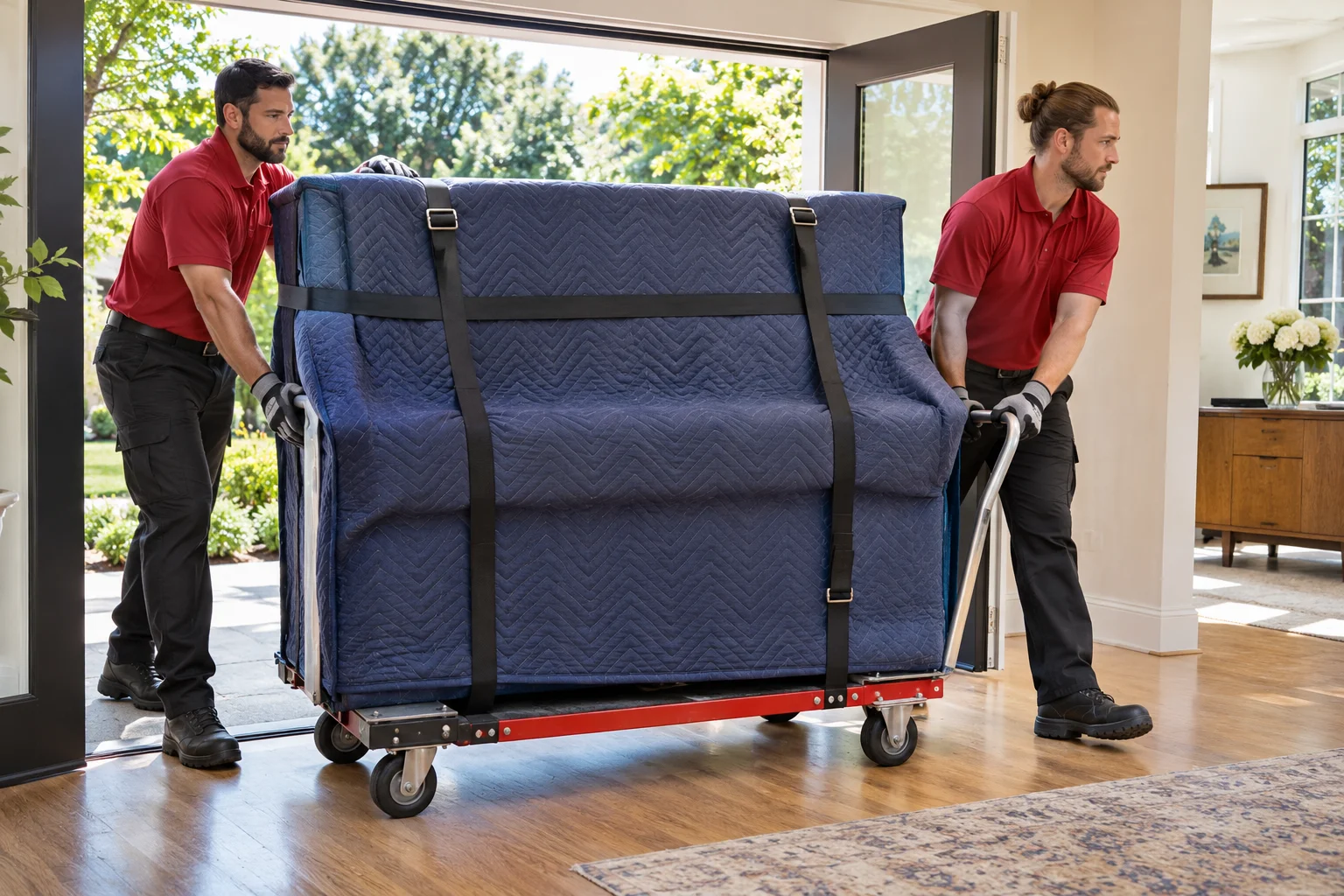
Piano moving: what to arrange first
A piano move needs a handling plan that fits the instrument and the property. Use this guide to prepare for upright or grand piano moving, compare specialist estimates, and plan access, storage, and delivery.
Give every estimator the same instrument details and measurements for both properties. Ask who provides the crew and equipment, what preparation is included, and how changes are handled. Keep condition records and specialist handling requirements with the written agreement.
Use the detailed planning sections below to turn that outline into a complete move brief. Record the decisions that apply to your property and shipment, and ask the provider to explain anything that remains uncertain. Keep the agreed scope with the inventory so it is available at pickup and delivery.
Describe the instrument before requesting an estimate
Tell the moving company whether you have an upright, grand, baby grand, or another type of instrument. Provide the make and model where available and explain its general condition. Include photographs of the whole piano, its base, and the space around it. Ask which measurements the estimator needs rather than guessing that the company can identify every handling detail from one image.
Explain whether the instrument is the only item moving or part of a larger household shipment. A separate piano appointment may need a different crew or schedule from the rest of the home. If another company handles the household furniture, make that distinction clear so each business knows its responsibility. Identify the collection and delivery contacts and keep the same instrument description with every estimate request.
Tell the estimator about unusual features or previous modifications that may affect preparation. If you have paperwork from a previous move, use it as a reference for questions, not proof that the next route will work the same way. The new address, access conditions, crew, and equipment may differ. Ask the chosen mover to confirm its own plan before booking.
Measure the complete route through the property
A useful access description starts where the instrument sits and ends where the vehicle can stop. Record door openings, hallway widths, corners, steps, landings, and the approach outside. Include any lift or elevator and the building's loading entrance. Ask the estimator which dimensions and photographs it needs to assess the route, especially where a turn or change in level is involved.
Describe surfaces and obstacles along the path. A steep driveway, loose gravel, a narrow garden entrance, or a long carry can matter even when the internal route is straightforward. Explain how close the truck can get to the doorway. If you do not control the parking or shared access area, ask the property manager what can actually be arranged for the appointment.
Provide the same detail for the destination. It is easy to focus on getting the piano out of the old home and overlook a difficult turn in the new one. Obtain measurements before confirming that a room is suitable for delivery. Ask the mover to identify any uncertainty while there is time to inspect it or discuss an alternative placement.
Ask about the crew and handling plan
Ask the business to explain its experience with the type of piano and access involved. Find out who will actually perform the work and whether a separate specialist is being arranged. Request a description of the equipment, preparation, and property protection included. A general offer to move heavy furniture does not explain how the company intends to handle your instrument.
Do not attempt to substitute household improvisations for the mover's handling assessment. Avoid planning to lift the instrument with friends or move it on unsuitable equipment to save time before the crew arrives. Keep the area clear and leave preparation tasks to the people responsible for the booked service. If you expect to do any work yourself, discuss it before agreeing to the scope.
Ask how the company handles a route that turns out to be different from the description. Identify who can stop and reassess the work, what information is needed, and how any revised arrangement is approved. Keep the operations contact accessible on the day. A clear plan gives the crew a practical basis for deciding whether the booked method still fits the actual conditions.
Compare piano moving quotes by scope
Give each estimator the same instrument details, route description, addresses, and preferred dates. Ask what the estimate includes for preparation, loading, transport, unloading, and placement. Identify stairs, long carries, building reservations, and any additional handling as part of the request. If the company needs a survey before confirming the work, arrange it before relying on the total.
Ask how the price changes if the access description is incomplete or the delivery appointment changes. Record any travel, waiting, storage, or redelivery charges that might apply. If the piano moves with other household belongings, ask which part of the estimate covers its specialist handling. Compare written scopes rather than treating every price labelled piano moving as the same service.
Keep payment and cancellation terms with the estimate. Confirm the name of the company accepting the booking and the party providing the crew. Ask when the balance is due and how changes are authorized. A useful comparison explains the work, the handling responsibilities, and the schedule, so you can see why two offers differ without assuming the lowest amount includes every stage.
Plan a local delivery appointment
For a move within the same city or region, confirm that the crew can access both buildings within the available hours. Reserve the elevator or loading area where required and provide the instructions to the company. If the piano is moving separately from household furniture, make sure the appointments do not block each other's loading routes or compete for the same reservation.
Arrange for someone who understands the agreed placement to be present at the destination. Decide the room and position beforehand, then describe them to the crew. Avoid a plan that requires repeated moves between rooms while other furniture is being unloaded. Keep the intended route clear and tell the company if a renovation, delivery, or building closure affects the appointment.
Ask how the company communicates its arrival window and what happens if it changes. Keep your contact number available and let the receiving person know who may call. If the instrument is being collected from a seller or a relative, confirm that person's availability too. A short drive still requires a workable handover at each address, especially when the parties do not share the same schedule.
Prepare for long distance piano transport
For a longer route, ask whether the piano travels directly or forms part of a shared shipment. Discuss loading, transfers, temporary holding, and the final delivery arrangement. Find out whether the same business controls the entire journey or another carrier takes over. Record the contact who can provide updates once the instrument has been collected.
Describe the instrument's preparation and protection in the written scope. Ask how the carrier plans for the conditions during transport and any scheduled storage. Confirm the pickup and delivery windows, and decide what happens if the receiving property is not ready. Keep the handling requirements associated with the instrument even if the rest of the household inventory changes.
If the route crosses the Canada–U.S. border, combine the transport plan with the cross-border document preparation. Include the instrument in the appropriate shipment inventory and ask the responsible clearance contact what details it needs. Do not assume the piano's specialist handling arrangement also answers the customs questions. Identify the person responsible for each part of the journey before collection.
Discuss storage before the instrument leaves
If the piano needs temporary storage, explain the instrument and the intended period to both the mover and storage operator. Ask what environment and handling arrangements they offer and whether those are suitable for the instrument's needs. Seek instrument-specific guidance where needed. Do not choose a storage option simply because a general household unit is available on the right day.
Ask how the piano is protected during the storage period and what happens when it is moved into or out of the space. Confirm whether you can access it and how much notice is needed for retrieval. Record the complete sequence: collection, storage handling, the storage period, release, transport, and final placement. Each stage should have a responsible business and an agreed contact.
Keep the next delivery date under review if the destination is uncertain. Ask about an extension, a changed address, or a longer holding period before it becomes urgent. Retain the inventory and condition record with the storage agreement. When the move resumes, make sure the receiving access details are still accurate and the delivery company has the same instrument information used for the original collection.
Record condition and clarify responsibility
Before collection, make a clear photographic record of the piano and note existing marks or concerns. Keep the photographs dated and store them somewhere accessible during the move. Tell the company about any issue that affects handling. A condition record helps identify what was known before loading without depending on a hurried conversation at delivery.
Read the agreement's protection and reporting terms carefully. Ask how the service treats the instrument, what is excluded, and how a concern should be documented. Keep any relevant inventory references with the record. Avoid assuming that a general statement about insurance explains the coverage for every instrument or every handling situation. Request clarification of the terms that matter to your decision.
At delivery, inspect the accessible surfaces and record specific concerns promptly. Ask about the process and timing for reporting damage or another problem under the agreement. Keep handling concerns separate from questions about tuning or the instrument's ongoing care, and seek the appropriate specialist for those needs. Retain the invoice, delivery record, photographs, and written correspondence together.
Get the destination ready for placement
Choose the intended position before the delivery appointment and make sure the agreed route is available. Discuss the instrument's placement and care with an appropriate piano professional if you are uncertain about the location. Provide the mover with the room layout and keep other furniture away from the loading path. Avoid asking the crew to make an unassessed move into a different part of the property.
Check that the floor area is clear and that access doors can be used during the booked window. Arrange any building permissions in advance. Tell other household members and tradespeople about the delivery so they do not block the entrance or working area. If a room is still under renovation, decide whether another delivery date or temporary arrangement is more practical.
Show the crew the planned position before unloading begins. Keep children and pets away from the handling route. Let the responsible team manage the work and raise a question through its designated lead rather than stepping into the path. Once placement is complete, confirm that any booked reassembly or other preparation work has been finished and ask whom to contact about an unresolved service issue.
Keep piano moving in the wider household plan
Add the piano appointment to the overall moving schedule rather than treating it as an unrelated task. Note which business handles the instrument, which handles other belongings, and which property reservations each requires. If the same company provides both services, keep the instrument's specific handling scope visible in the agreement. Make sure the final inventory still identifies it clearly.
Keep the contact details and condition record accessible on moving day. Confirm the arrival window and tell the company about any changed access conditions before it dispatches the crew. If a sale, storage arrangement, or renovation changes the destination, request a revised plan. Do not assume that a handling method assessed for one route remains suitable for a different property.
After delivery, retain the paperwork and arrange any instrument care you need with the appropriate professional. Use the packing, storage, long distance, and cross-border guides on this site for the other parts of the household move. The essential planning questions remain specific: which instrument is moving, what route it must follow, who is responsible for handling it, and what the written service actually includes.
Questions to ask before confirming the booking
Can the piano travel with the rest of the household? Ask the company to confirm whether it offers the required handling within that service and how the instrument is prepared and carried. If a specialist or separate vehicle is needed, record the arrangement. Do not assume that adding the piano to a general furniture list is the same as agreeing on a suitable handling plan.
Does an upright piano need an access assessment? Describe the instrument and the complete route, including steps and tight turns, and ask the company what assessment it requires. The relevant question is whether the proposed crew and method fit the actual job. A previous successful move does not describe the conditions at a different address.
What if the delivery room is not ready? Discuss a revised date or a suitable storage arrangement before the crew arrives. Give the company the updated destination details and ask how the change affects handling and charges. Avoid an improvised temporary location that has not been assessed as part of the route.
Who answers questions about care after the move? Ask the mover about completion of the booked service and speak with an appropriate piano professional about the instrument's care. Keep the delivery and condition records available for both conversations. This separates an operational question about the move from an assessment that requires instrument-specific expertise.